Borescope Testing (BT) is a highly effective Non-Destructive Testing (NDT) method used in industrial welding inspection and testing to visually examine areas that are difficult or impossible to access directly. By using a flexible or rigid optical device equipped with a high-resolution camera and lighting system, inspectors can view the internal condition of welds, components, and assemblies without disassembly or damage.
In industrial welding applications, Borescope Testing is particularly valuable for inspecting the internal surfaces of pipes, tubes, pressure vessels, heat exchangers, and structural fabrications. The borescope is inserted through small openings or access ports, transmitting real-time images and video to a monitor. This allows inspectors to identify internal weld defects such as cracks, lack of fusion, incomplete penetration, porosity, undercut, misalignment, and corrosion.
Borescope Testing plays a critical role during fabrication, maintenance, and in-service inspection. It enables quality control teams to verify root weld conditions in pipelines, examine internal weld beads, and assess the integrity of components after repair. In many cases, it eliminates the need for costly dismantling, reducing downtime and operational disruption.
Modern borescopes are equipped with advanced features such as articulating probes, adjustable LED illumination, high-definition imaging, and digital recording capabilities. These technologies enhance visibility, improve defect detection accuracy, and allow inspectors to capture photographic and video evidence for documentation and reporting purposes. The ability to store and review inspection records supports compliance with project specifications, industry codes, and regulatory requirements.
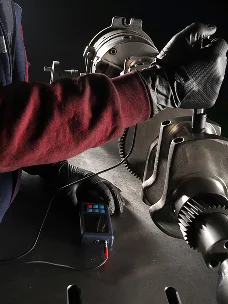
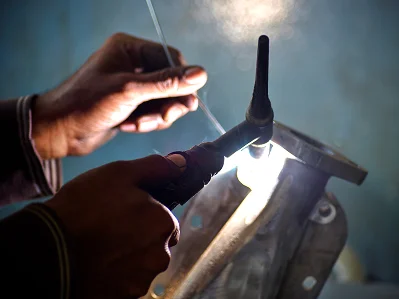
One of the key advantages of Borescope Testing in welding inspection is its speed and efficiency. Inspections can often be completed quickly with minimal preparation, making it ideal for confined spaces and complex assemblies. Additionally, it provides immediate visual feedback, allowing rapid decision-making during fabrication or repair processes.
Borescope Testing is frequently used alongside other NDT methods such as Radiographic Testing (RT), Ultrasonic Testing (UT), Magnetic Particle Testing (MT), and Visual Testing (VT). When integrated into a comprehensive inspection program, these techniques provide a thorough evaluation of weld quality and structural integrity.
Another important benefit of Borescope Testing is its ability to support preventive maintenance programs. By conducting routine internal inspections, potential defects or early-stage degradation can be identified before they develop into critical failures. This proactive approach enhances asset reliability, extends service life, and helps organizations avoid unexpected shutdowns and costly repairs.
Borescope Testing is also highly adaptable to a wide range of industrial environments, including high-temperature, confined, or remote locations where traditional inspection access is limited. With the use of specialized probes and protective sheathing, inspections can be performed safely in challenging conditions while maintaining image clarity and accuracy. This versatility makes BT an essential tool in modern industrial welding inspection and testing programs.
At Expert Inspect, Borescope Testing services are carried out by qualified and experienced inspectors using advanced equipment designed for industrial environments. Our team ensures accurate internal weld assessments, detailed reporting, and reliable support for your welding inspection and testing requirements, helping you maintain the highest standards of safety, quality, and performance. Through a commitment to precision, safety, and technical excellence, we deliver inspection solutions that add measurable value to every project.