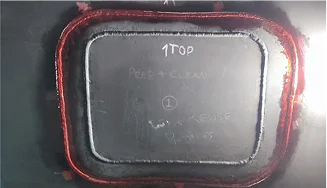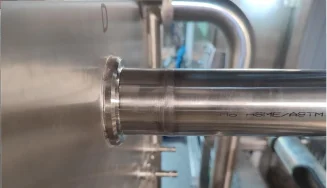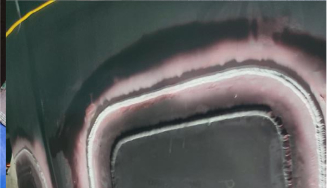

Liquid Penetrant Testing (LPT) is a widely used Non-Destructive Testing (NDT) method designed to reveal surface-breaking defects in non-porous materials. It is particularly effective for detecting flaws such as cracks, porosity, laps, cold shuts, and other surface discontinuities that may compromise the integrity of critical components.
This inspection technique works by applying a specially formulated liquid penetrant to the surface of the component being tested. The liquid, which contains highly visible or fluorescent dye particles, is allowed sufficient time to seep into any surface-connected defects. After a dwell period, excess penetrant is carefully removed.
Once the surface has been cleaned, a developer is applied. The developer draws the penetrant trapped in defects back to the surface by capillary action, creating a visible indication. These indications can then be evaluated under appropriate lighting conditions to determine the presence and severity of surface defects.
Liquid Penetrant Testing is valued for its simplicity, versatility, and cost-effectiveness. It can be performed on a wide range of materials including metals, plastics, ceramics, and glass, provided the surface is non-porous. This makes LPT a versatile choice in many industrial environments such as fabrication shops, refineries, and manufacturing plants.
Preparation of the surface is critical for accurate results. Inspectors must ensure that surfaces are free from oil, grease, scale, paint, and other contaminants that can block defect openings or produce false indications. Proper cleaning and surface conditioning help improve the reliability of the inspection results.
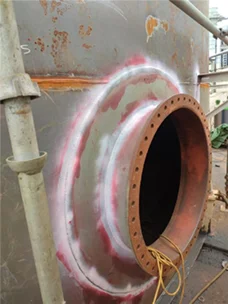
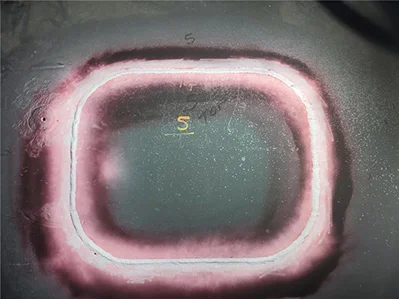
LPT is commonly used for inspecting welds, castings, forgings, heat-treated parts, and other critical structural components. It is often employed in conjunction with other NDT methods, such as Visual Inspection (VT) and Magnetic Particle Testing (MT), to provide a comprehensive assessment of surface and near-surface integrity.
At Expert Inspect, Liquid Penetrant Testing is carried out by qualified NDT technicians who are trained in industry standards and procedures. Detailed reports are produced documenting findings, indication locations, and any recommendations for corrective action or further testing to ensure client projects meet quality and safety requirements.
The advantages of Liquid Penetrant Testing include its ability to detect very fine surface defects, ease of application in the field, and applicability across many material types. When used as part of an integrated inspection program, LPT enhances confidence in material performance and helps prevent failures that could lead to costly downtime or safety issues.